

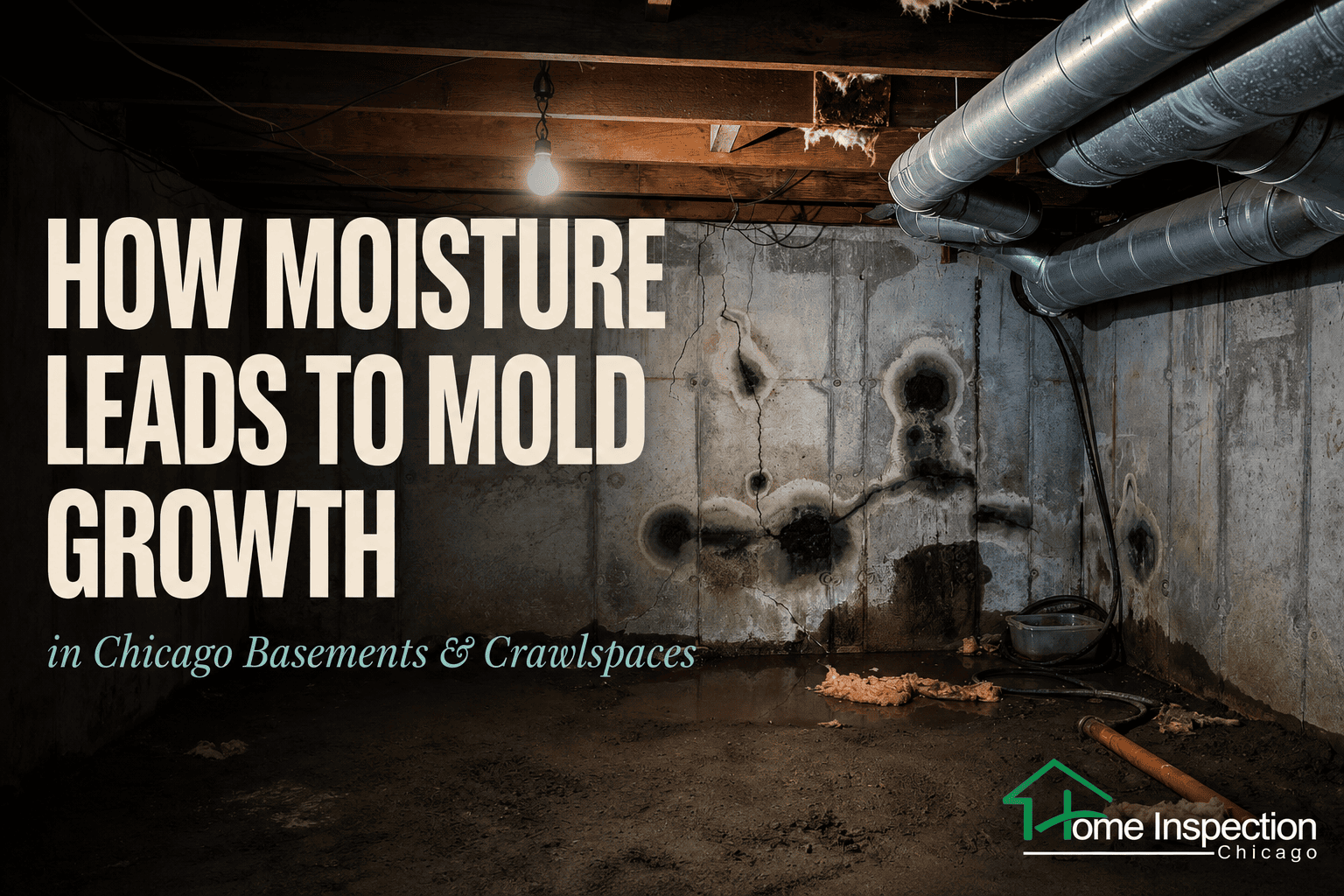
Chicago homeowners know how quickly the weather can change. A humid summer can leave the air feeling heavy, while heavy rain, snowmelt, and sudden temperature fluctuations can put extra pressure on a home’s foundation. In older homes, small foundation cracks, poorly drained soil, basement condensation, and crawlspaces with limited ventilation can allow moisture to build up quietly. Over time, these hidden conditions can create the ideal environment for basement mold in Chicago, often before homeowners realize there is a problem.
Why Chicago Basements and Crawlspaces Are Vulnerable to Hidden Moisture
A number of circumstances exist in Chicago that could lead to an increase in mold growth in the basements of buildings in the area. The seasonal humidity, heavy rainfall, summer thunderstorms, snow, and spring thawing could be some of the causes of moisture introduction into or around the building.
Basement walls being below grade levels always remain in contact with the surrounding soil. In addition, there could be cases of old buildings in the city with deteriorating masonry, wall cracks, old drainage, and faulty gutters and downspouts not able to divert moisture sufficiently far from the building. Moreover, water in a crawlspace can be risky due to its closeness to moist soils and poor ventilation.
Moisture problems usually arise and stay hidden behind interior wall finishes, flooring, or crawlspaces.
Where Does Moisture Come From?
Moisture that stays hidden does not always come from a major flood or obvious plumbing failure. In many homes, several smaller sources can work together, causing basement moisture problems that continue to develop over time without immediate signs of water damage.
1. Foundation Wall Leakage
Even a little water that is around the foundation may seep into the building through any cracks, gaps in masonry, porous concrete, worn-out mortar joints, and wall-floor or cove joints. Any leakage is capable of introducing enough moisture inside the structure and cause various problems, especially if it happens several times.
2. Condensation in Basement
When humid air enters the basement from outside and meets colder basement surfaces such as pipes, walls, floors, etc., it condenses and leaves these surfaces moist, although no leak is apparent.
3. Humidity from the Air
It is not necessary for a basement to be flooded in order for there to be a problem with moisture. High relative humidity levels, lack of ventilation, insufficient dehumidification, and the entry of moist summer air into the area can result in the presence of mold in basement areas.
This is another reason why the homeowner might ask, as to why the basement is wet while there is no water present. In most cases, the reason is either excess humidity or condensation, not standing water.
4. Moisture from Ground in Crawlspaces
Crawl spaces are very close to the ground and therefore prone to moisture coming from the soil; such crawlspace moisture can impact your home.
5. Plumbing Leaks and HVAC Condensation
Not all sources of moisture issues come from outside. Plumbing leaks from pipe systems, hot water heaters, washer lines, or even condensation on HVAC drain lines can cause a slow leak of moisture. Moisture can also be released by condensation from ducting. Hence, a thorough home inspection can fix these issues.
6. Gutters, Downspouts and Drainage Issues
Moisture issues that start outside the building will eventually make their way inside the building. Gutters that have become clogged, or that are short, along with improper grading of landscaping or poor drainage of the soil can lead to water accumulating around the foundation.
How Hidden Moisture Creates the Perfect Environment for Mold
Moisture in a suitable temperature and the presence of organic material can lead to mold growth. Hence, the following conditions can work together to create such an environment:
- Water/Moisture: Mold requires dampness to thrive.
- Temperature/Conditions: Mold is able to develop in basements and crawl spaces because of suitable temperatures.
- Organic Substances: Mold can feed on drywall, wood, carpet, insulation, and dust.
- Hidden Moisture: Hidden moisture can allow mold to grow undetected behind walls.
- Humidity: High humidity levels can cause mold growth in a basement without flooding.
8 Signs Your Basement or Crawlspace Has a Hidden Moisture Problem
A hidden moisture issue can develop quietly, and signs of hidden moisture in a basement may appear long before you notice standing water or obvious damage. Recognizing these warning signs early can help prevent the problem from becoming more serious.
1. Musty Or Damp Smell
This serves as the primary indication that the problem exists. If you have realized why your basement smells musty, then the cause of this smell is high humidity, dampness in some areas of your basement, or mold growth behind the walls, floors, and other objects stored in your basement.
2. Mold Growth Spots
These spots may be of different colors, including black, green, or white, and appear on walls, on wood, insulation, or objects you have been storing in the basement. For this, you require a mold inspection conducted by professionals.
3. Condensation On Pipes Or Walls
Water drops on cold pipes, walls, or any other surfaces are a sign of excess humidity. Such condensation is one of the possible reasons for the development of mold.
4. Peeling Paint or Bubbling Drywall
Paint can peel, bubble, or detach from the wall due to the presence. Drywall may also become soft, swollen, or discolored due to the continued moisture effect on it.
5. Efflorescence on Foundation Walls
Efflorescence is characterized by a white, powder-like substance appearing on masonry or concrete walls. It may be a sign that there has been moisture migration through the walls. Efflorescence is not mold but may show water migration within the foundation.
6. Wet or Swollen Wood
Moisture can be absorbed by wood in walls, trim, or floors. Any form of wetness, warping, swelling, discoloration, or degradation of the wood could be a sign of moisture presence.
7. High Humidity in Basement
A basement that always feels damp or uncomfortable may be characterized by high humidity levels. High humidity levels in a space mean that more moisture controls are needed.
8. Persistent Water after Rain or Thawing
Whenever water comes in after a storm, the cause needs to be determined rather than just drying it out each time. People who have water problems in their crawl spaces after rainstorms need to investigate exterior drainage or foundation problems.
How to Prevent Hidden Moisture & Mold in a Chicago Basement
Effective basement mold prevention starts with controlling the moisture source rather than only treating visible symptoms.
Control Indoor Humidity
Watch for humidity levels in the house and take the required action to ensure good air circulation. If the humidity levels are high, it is possible to reduce the moisture level in the air.
Drainage
Maintain good gutter control and ensure that the downspouts work properly. Proper grading of the land is required so that no water collects around the structure. Efficient drainage will minimize the quantity of water that surrounds the underground walls.
Fix Structural Problems Causing Moisture Penetration
Any cracks and deteriorated joints in the foundation, as well as other water penetration sources, have to be assessed and fixed.
Properly Sizing Your Dehumidifier
A properly sized dehumidifier can assist in regulating moisture in the air. Nevertheless, if high humidity persists despite frequent use of the device, then there must be another water source.
Keep Crawlspaces Dry and Encapsulated When Appropriate
Oftentimes, water in crawl space accumulates after heavy rain. Reducing exposed soil and limiting moisture movement can help maintain your crawlspace. Understanding how to prevent mold in a crawl space can also help homeowners choose effective moisture-control measures for long-term protection.
Maintain Sump Pumps and Drainage Systems
Sump pumps and interior drainage systems should be maintained and checked regularly. A system that fails during a major storm can allow a preventable moisture issue to become a larger cleanup project.
When to Call a Basement or Crawlspace Moisture Professional
All wet areas require repair work, but recurring or inexplicable dampness needs investigation before it causes additional damage. Here are some signs that you can take note of:
- Recurring Dampness: The area gets damp repeatedly.
- Persistence of Musty Smell: The smell persists despite cleaning or ventilation of the area.
- Visible Mold: Mold can be seen on walls, wood, insulation, or any other surface, and requires mold remediation in Chicago due to changing seasons.
- Wet Building Materials: Building materials are still wet or damp.
- Continuous Condensation: Moisture forms continuously on pipes, walls, or other surfaces.
- High Humidity: The level of moisture remains high despite the use of a dehumidifier.
- Foundation Leakage: Moisture comes through foundation walls or cracks in them.
- Pooling of Water: Moisture pools up continuously in the crawlspace.
- Damaged Wood: The wood is wet and damaged.
- Continuous Formation of Mold: Mold grows back even after cleaning or treatment.
Frequently Asked Questions About Basement Moisture and Mold
Why does my basement smell musty but look dry?
A musty smell can be caused by hidden moisture, elevated humidity, damp materials, or mold growing behind walls, beneath flooring, or in other concealed areas.
What to do if water gets in a crawl space?
First, identify the source of the water, whether it is rain, poor drainage, groundwater, a plumbing leak, or another issue. Remove standing water when appropriate and address the underlying moisture source to prevent it from returning.
How do I know if moisture is coming through my foundation?
Common signs include damp walls, efflorescence, peeling paint, recurring seepage after rain, and water collecting near wall-floor joints. A professional evaluation can help identify the exact entry point.
Can crawlspace moisture affect the rest of my house?
Yes. Moisture and musty odors can affect materials above the crawlspace, while prolonged dampness may contribute to wood damage, insulation problems, and indoor humidity concerns.
How can I prevent mold from coming back?
The key is to eliminate or control the moisture source. Drying visible mold without correcting humidity, leaks, seepage, or drainage problems may allow mold to return.
Is crawlspace encapsulation necessary for every crawlspace?
No. The right solution depends on the crawlspace design, soil conditions, drainage, ventilation, and the source and severity of the moisture problem. An evaluation can help determine whether encapsulation is appropriate.
